
Author: Soňa Sopirová
“Since the full-scale invasion of Ukraine, I knew I couldn’t stay quiet,” Viktoria Maladaeva tells me. For her, silence was never neutral. It meant accepting a system that had long treated Indigenous peoples as expendable — their lands exploited, their languages suppressed, their sons disproportionately sent to war. As a Buryat-Mongolian activist from Siberia, Viktoria’s resistance did not begin in 2022. It began much earlier, shaped by racism, colonial hierarchies, and the quiet erasure of her people’s identity. This article is based on a conversation with Viktoria Maladaeva, who shared her personal experience as an Indigenous rights activist and profound insight into the multiple challenges faced by her community
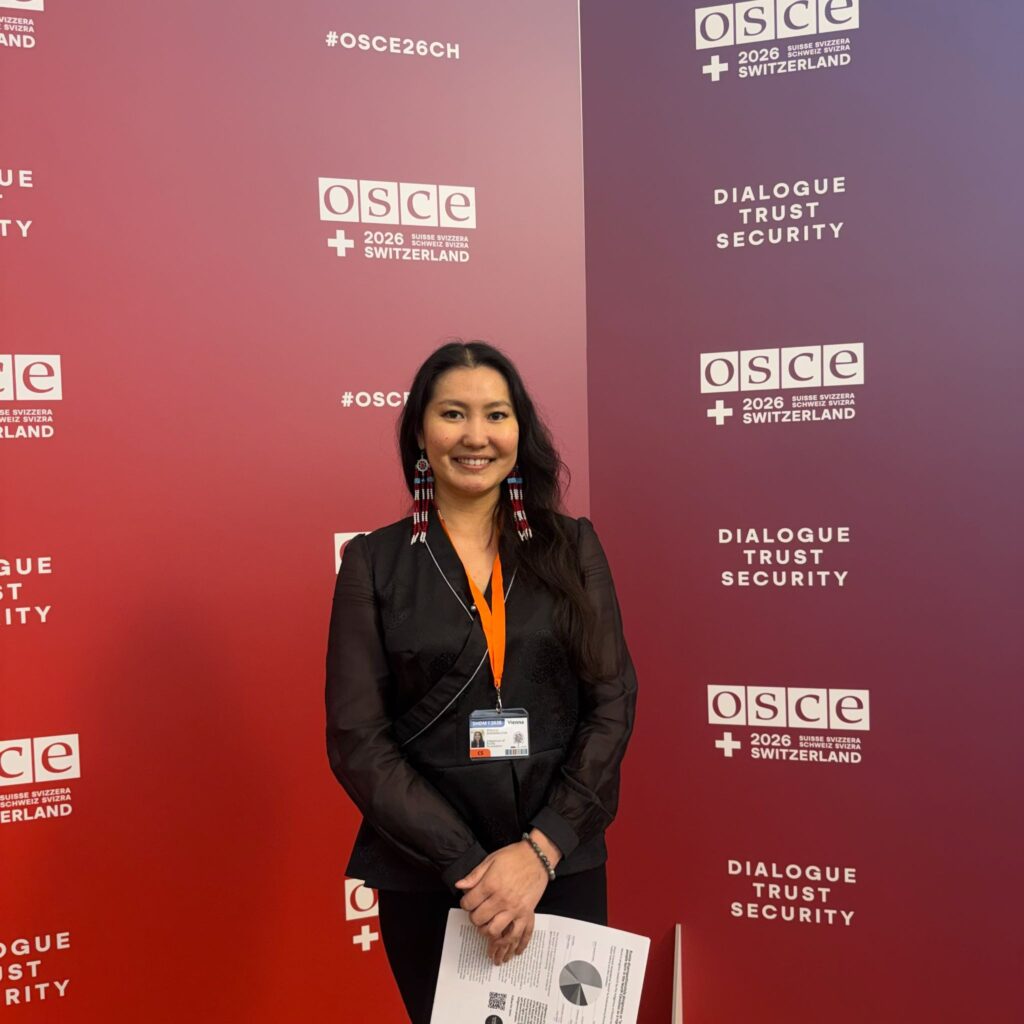
Who Is Viktoria Maladaeva
Viktoria Maladaeva is a Buryat-Mongolian human rights defender and anti-war decolonial activist from Russia. She moved to San Francisco in 2015, where she continues her relentless fight for communities that are historically oppressed, overlooked and silenced by the Russian political regime. As an Indigenous rights activist, she is also a founder of the Indigenous of Russia Foundation. With it, she advocates for Indigenous peoples’ rights and raising awareness about Russia’s colonialism, extractivism and war in Ukraine.
Photo source: Image courtesy of Viktoria Maladaeva
Buryats People – Siberian Guardians of Culture and Tradition
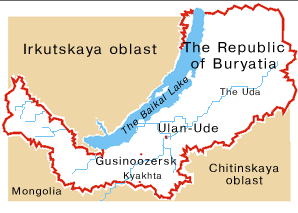
Viktoria was raised by her mother in the Buryat culture and traditions, together with her three sisters. “I was born and raised in the Republic of Buryatia in an ordinary family, a low-income single-parent family; my mother raised four of us.” The Buryats are a Mongolic ethnic group and Russia’s most distinctive Indigenous peoples’ community. They live in the Republic of Buryatia, which lies along the crystalline waters washing the shoreline of Lake Baikal, hidden between the wild mountains of Siberia. In the heart of this, at first glance, inhospitable and freezing land, lives a Buryat community for whom this land is sacred. The land represents a source of their unique cultural and spiritual heritage. Originally, as nomadic herders roaming the steppe on horseback, Buryats drew strength from their deeply rooted spiritual belief system, combining Shamanism and Tibetan Buddhism. Its influence is still evident in the territory today. Buryats’ spiritual worldview combines ancestral knowledge, nature reverence and mystical healing, shaping their cultural heritage despite Soviet-era suppression and Russification pressures.
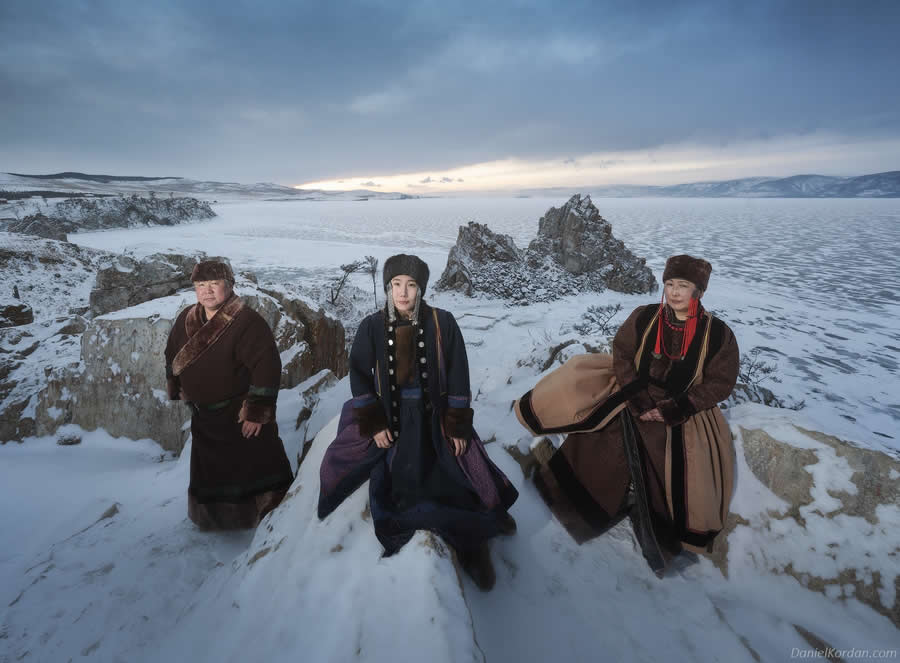
Despite its cultural significance, the region suffers from widespread poverty, underdevelopment and high corruption, which led Viktoria to leave her homeland and move to the Russian city of Saint. Petersburg to study. After moving to St. Petersburg, Viktoria described her experience as follows: “From the start, I was faced with racism and discrimination. Because I was raised in and went to Buryat National School, I was in a kind of bubble.”
From Mrs Saint Petersburg to Indigenous Resistance
In our conversation, she reflects on the harrowing events she endured as a just seventeen-year-old girl after moving into Saint Petersburg, a predominantly Slavic city, recalling moments when she was attacked and repeatedly subjected to ethnic insults.“For me, moving into a predominantly white Slavic city was challenging, as a seventeen-year-old, constantly hearing the slurs or even constantly being attacked in the subway, it was a traumatic experience.”
The discriminatory encounters, including physical attacks and threats against Viktoria because of her ethnicity, started to spiral in 2014 when she decided to participate in the Mrs Saint Petersburg beauty pageant competition. It was around this time that she began to gain online recognition. “Mrs Saint Petersburg, which wasn’t popular at the time, was rarely covered in the media, even in the local Saint Petersburg media, so I decided for myself and didn’t have any hesitation because of my ethnicity”.
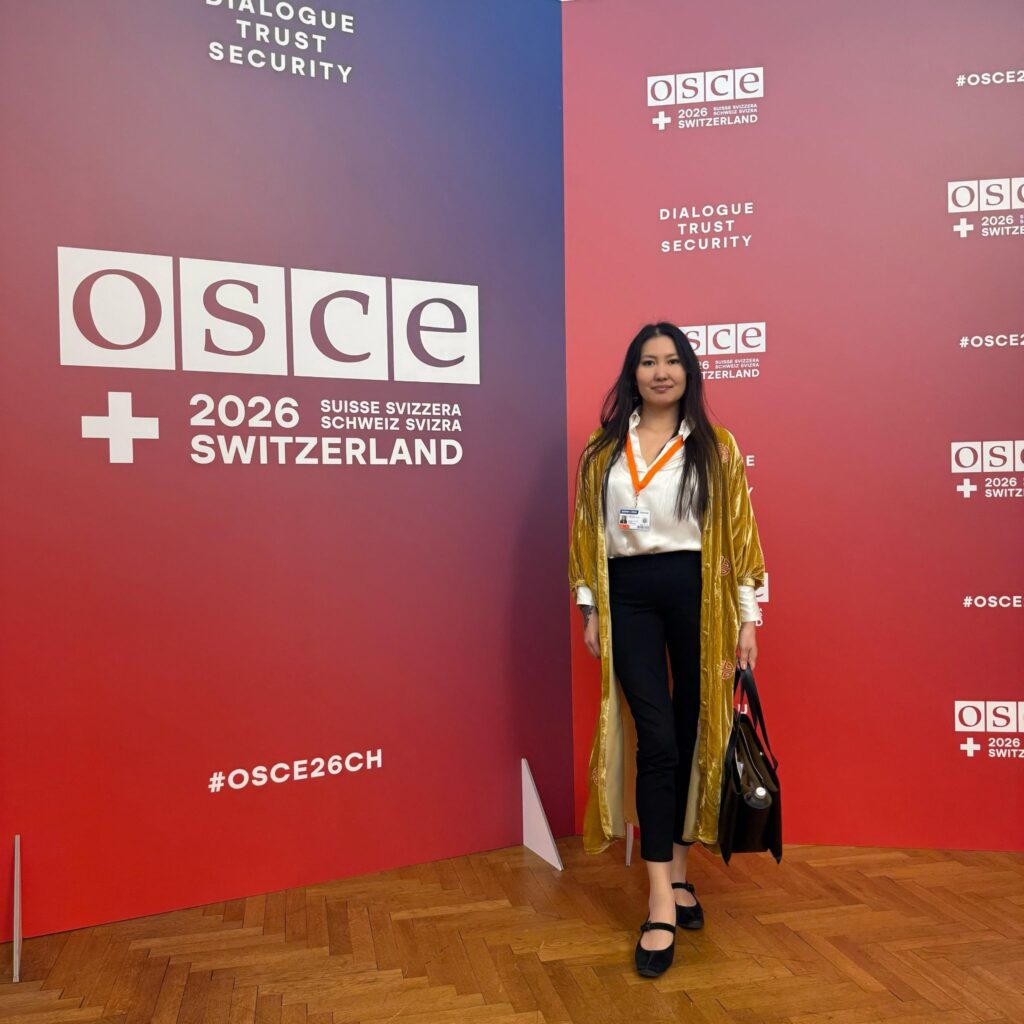
However, immediately, she was faced with discrimination due to her ethnic background. “People started complaining that I’m not Slavic. I can’t be Mrs Saint Petersburg.” Viktoria further explains that this was a result of persistent and deeply-rooted narratives framing non-Slavic and Indigenous people as “savages that need to be civilised.” This is a concept historically and persistently used by colonial nations to justify the domination, forced conversion, and cultural erasure of Indigenous populations inhabiting the occupied territories. “Attitude towards Indigenous people and non-Slavic people has never changed. We were always considered as little brothers, so this racism and discrimination were never acknowledged.”
Speaking out openly against President Putin and the annexation of Crimea as an Indigenous woman was a dangerous combination, as she explains. “They started attacking me, and I started receiving threats, and my life was basically in danger. But I won the title, and then it was a really hard time for me because it was so traumatic, and I became famous overnight.”
Ultimately, she was forced to leave Russia in 2015, moving far away from her community, traditions, and homeland that had shaped her as she grew up in the Buryat community.
A Voice Carved From Experience
Enduring such a traumatic experience as a young woman profoundly shaped Viktoria’s worldview. Rather than silencing her, she leaned into her Buryat identity, embracing her ancestors’ roots, culture, and traditions, while opposing the colonial narratives and prejudices embedded in Russian society. That experience became a catalyst for her work. She sought to uplift her community, challenge state propaganda, and help Buryat people reclaim their voices and stories. She was driven by a need to protect their ancestral land and affirm the vital role they play in shaping their own future.
Viktoria’s journey into the world of activism began in 2022. She became a leading figure in civil society’s resistance to Russia’s full-scale invasion of Ukraine and co-founded the Free Buryatia Foundation, an advocacy group established to support Indigenous people.“Since the full-scale Russian invasion of Ukraine, Indigenous peoples, particularly Buryat, have been hit the hardest. I wanted to help raise awareness about systemic colonial oppression and discrimination faced by Indigenous people and ethnic minorities in the Russian Federation.”
Leaving the organisation in 2023 allowed her to expand her activism far beyond the borders of her Siberian homeland. The result: she founded the Indigenous of Russia Foundation. Rooted in the belief that all Indigenous communities suffer equally from Russian colonialism and that strength is found in unity, the Foundation seeks to unite Russia’s Indigenous peoples and ethnic minorities. At the same time, it sheds light on the country’s history of imperial conquest that has been in place for generations.
Her strong sense of agency and relentless work did not diminish when she left her homeland. On the contrary, it gave her even greater strength and motivation to continue fighting for those who cannot. “To fight the propaganda of militarism, war, and colonialism, because those in Russia are, unfortunately, under a lot of pressure and discrimination, I think Russians abroad just have to fight this. Historically, the diaspora played a lot of roles in protecting the rights of people back home and connecting communities with international human rights organisations and media.“
The Erasure of Buryat Language
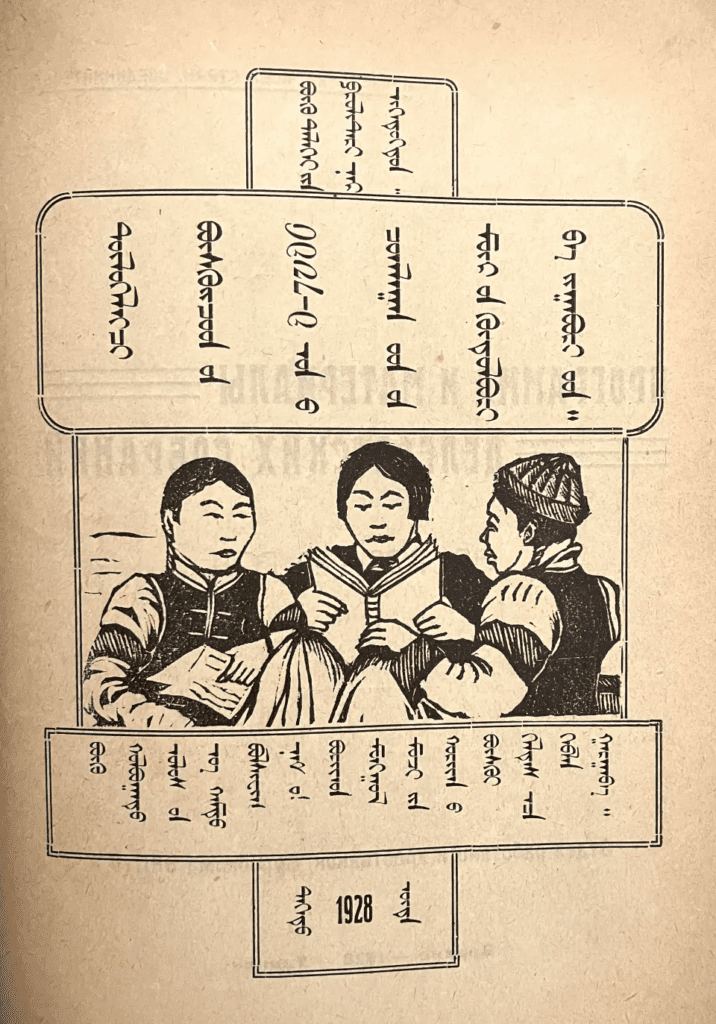
For Indigenous communities, words hold the stories, songs, dances, connections, and knowledge amassed over millennia. When a language dies, so does the link to its cultural and historical past. Losing this fundamental connection to communities’ linguistic and cultural history has a detrimental effect on people’s sense of identity and belonging. With the Buryat language slowly disappearing from Buryat land, the community’s traditions, cultural heritage and identity are now being threatened as well. “Our language is officially endangered, and it’s so sad to see it’s fading away, Viktoria explains, as the Buryat language has been classified as severely endangered(by the UNESCO Atlas of the World’s Languages in Danger). For her, the disappearance of the Buryat language is not only a cultural issue but a deeply personal one. Growing up, seeing the language of her community disappear shaped her early awareness of inequality and injustice.
This does not represent a sudden shift, but rather the result of systematic discrimination and repression carried out by Russian authorities against Indigenous people for generations.“In Russia, you have been attacked because you look like a non-Slavic person, even though we are Russian citizens.”For example, between 1930 and 1980, the Soviet Union repeatedly suppressed and, at times, banned the use of the Buryat language. Speaking it publicly was met with stigmatisation: “People would shame you if you spoke the Buryat language.” Being shamed for speaking your own language is a way of disgracing your first identity and your ethnicity; it teaches people that their identity is inferior. For Viktoria, this realisation became central to understanding how colonial powers operate — not only through laws, but through everyday humiliation.
Indigenous Communities in the Shadow of the Ukraine-Russia War and Extrativism
Russia is waging war not only against Ukraine but also against some of its own people. Russia’s recruitment of soldiers to fight in its war in Ukraine has disproportionately drawn from Indigenous peoples’ countries, such as Buryatia. At least 2,470 inhabitants of Buryatia have been killed in action so far. Although the number is likely underestimated and includes both ethnic Buryats and Russians, it reveals a striking disparity: the death rate is 27 times higher than in Moscow. This burden of the war has therefore fallen unevenly and heavily on the Buryat community.
For Viktoria, this imbalance is not an isolated statistic but part of a larger pattern she has long observed. Such discrimination and often openly racist attitudes toward Indigenous people among the ethnic Russian population were, to her, less a case of abstract concepts than a burden of lived experience. The war, in many ways, simply made visible what had always been there — a political system shaped by Russia’s imperial past, where one ethnicity is treated as dominant while others are destined to be colonised and subjugated. Realising how deeply this hierarchy runs became central to her activism.
“The war gave an excuse to the state to expand surveillance, censorship, and militarisation, especially in national republics.” Beyond disproportionate casualties, Viktoria sees how the war has strengthened state control, not only over narratives surrounding the war, but also over the national republics’ abundant natural resources. Much of Russia’s oil and gas lies on Indigenous ancestral territories, yet local communities rarely benefit from this wealth. Instead, they face environmental degradation, repression, and silencing. “South Russia is benefiting from exploiting Indigenous lands, suppressing our voices, because we are defenders of our land, of our ancestors’ land.They [Indigenous people] don’t benefit from this attractive industry at all.”
In this way, Buryatia is not only a peripheral region. It is also critical to Russia’s territorial integrity and serves as the backbone for Moscow’s imperial ambitions. Without it, President Putin’s idea of a great and united Russia would fall to pieces. “If a National Republic [like the Republic of Buryatia] gains independence, then Russia won’t be able to extract resources like oil.” Maintaining control over it means maintaining access to resources. That control, she argues, relies on division, propaganda, exploitation, and the silencing of those who oppose the Russian president. “Russian state and extractivist companies would target Indigenous people, Indigenous activists who defend their lands, defend their rights and silence them through censorship, through arrests and fines.”
This realisation left Viktoria with no option but to act, profoundly shaping the direction and urgency of her activism. Through her work, she amplifies the voices of her community — stories of those sent to the front lines and those resisting the ongoing exploitation of their land — while confronting Russian propaganda that attempts to justify a senseless war that benefits no one.
For Viktoria, militarisation and resource extraction are deeply connected. Maintaining political control over Indigenous regions ensures the state’s continued access to their oil, gas and other resources, which in turn help sustain the war in Ukraine. “It’s money, it’s all about money. Russian oil, gas and other resources are on the Indigenous land. They will just come and take everything. The resources that destroy our environment, destroy the land, and pollute it. But they leave. Take everything, and they leave. But our kids will stay there and live for generations. But what’s going to be left after all these extractive activities?”
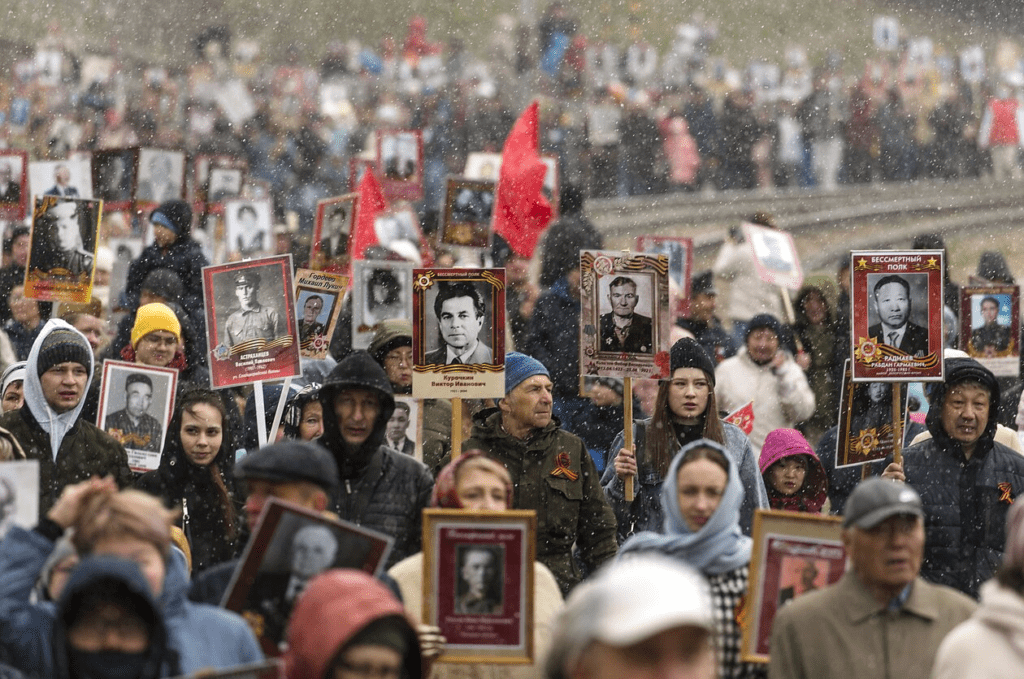
Photo source: AP nuotr.
Important Role of Women’s Leadership
For Viktoria, raising her voice against the current regime as a woman was not about being brave or exceptional, but about a sense of responsibility — an inner calling to speak the truth and protect her people and ancestral land.“Since the full-scale invasion of Ukraine, I’ve started this opposition against President Putin, and against the war as a woman, because I knew I couldn’t stay quiet.”
But being a woman in this struggle has not been neutral. It has shaped both the risks she faced and the way her voice was received. Like many women activists, she has been dismissed, attacked, and called names — attempts to prevent her from speaking the truth, exposing the deeply rooted patriarchal logic. In a political environment dominated by masculine narratives of strength, militarism, and control, women who speak out often become targets of gendered expectations. They are framed and perceived as “weaker” and easier to silence. In that sense, her activism serves as a reminder of the pre-existing gendered expectations that dictate who gets to speak and who is taken seriously.
At the same time, Viktoria’s voice is rooted in a longer tradition of Buryat women’s leadership. “Historically, women have held an important role in our societies and have always had a strong voice. Even now, the anti-colonial Indigenous movement in Russia is predominantly women-led.” While surprising to many, this comes naturally to Viktoria, as Buryat women have long played a central role in community survival and resistance. Yet, to this day, their leadership unfolds in times of militarisation and exploitation. “Our women and I think our strength comes from our ancestors and from our collective memory”
This tension became especially visible during the protest against mobilisation in the Republic of Sakha (Yakutia). “Five hundred women showed up to the protest against mobilisation, against the war. They danced their traditional dance, they were singing, and just crying. When I was looking at that, I was crying and just felt heartbroken because of these women. This was, I think, one of the largest women’s protests in modern history in Russia.”
The protest challenged the regime not through confrontation, but through collective grief and cultural expression. In a system built around patriarchal ideas of aggression and domination, these women asserted a different kind of strength — one grounded in community, tradition, and protection.
Decolonising Begins Within
In our conversation, Viktoria spoke about the long and deeply personal process of “decolonising her mind”, a process deemed necessary to unburden oneself from the imperialistic mindset perpetuated by Russian authorities upon Indigenous communities for centuries. “Imperial mindset never went away.” From childhood, she explained, people are taught to view Russia as a great and powerful nation that draws strength from its multiculturalism and diversity. However, she argues that this narrative is part of recurring propaganda designed to indoctrinate and isolate Indigenous communities.
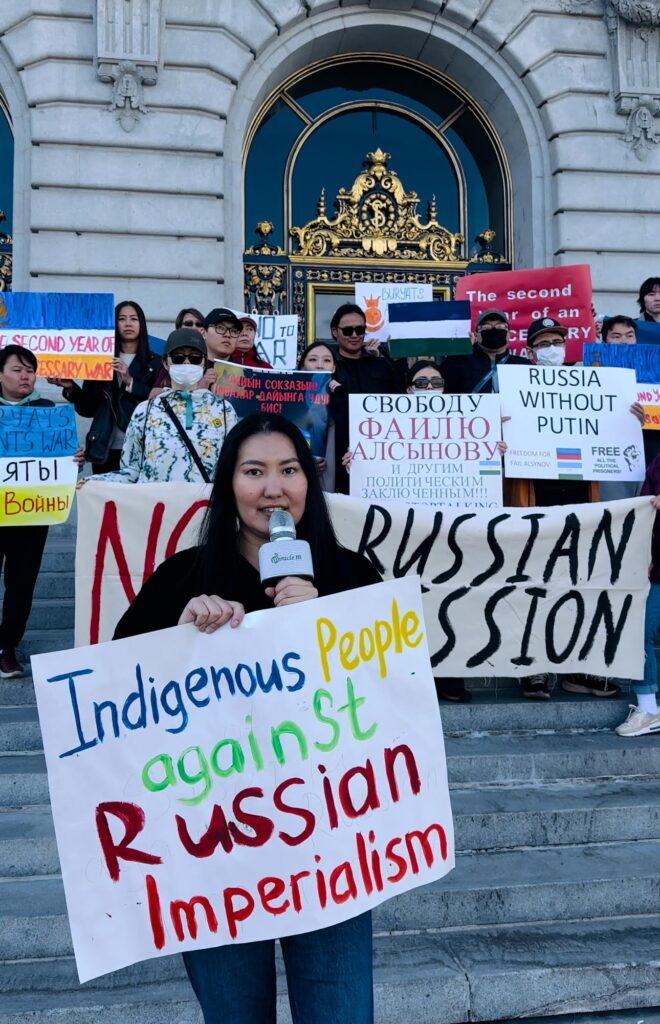
“When President Putin, or even the Russian opposition, speaks about a beautiful, united Russia, they speak about territories they don’t know. They don’t talk about people in those territories. It’s all about these territories and resources for them.”
For Viktoria, decolonisation starts in the head by learning about her ancestors’ history, reconnecting with her roots, and unlearning the narratives imposed by colonial institutions. “Even among our Indigenous groups in Russia, we knew little about each other. Not even about our history, but just about each other.” Although she grew up immersed in Buryat customs, traditions, and Buddhist practices, she was never taught the real history of her people. “As I said, we didn’t learn about our dual history in school, so for me it’s all about learning first.”
Reclaiming that knowledge, she believes, is an act of resilience — one that allows Indigenous communities to speak truthfully about struggles that did not arise today, nor yesterday, but have been carried across generations. “We never had historical justice. We don’t know. We don’t learn our real history about our people. And it’s all intensified since the full-scale invasion of Ukraine,…”
Conclusion
Fighting war, colonialism, and propaganda is not only an act of resistance — it is an act of care. According to Viktoria, solidarity begins with refusing silence, using your voice to tell the truth and to remind the world that, behind politics, there are real lives, families, and future generations.
What sustains her is the knowledge that she is not alone in history.
“In 2022, you learned that my people were fighting, but when the Soviet Union banned Buryat language, they were resisting all these discriminatory laws in the 60s, 40s, 20s or even back in the 17th century, they were all resisting Russian invaders and colonial policies, and so that gives me strength to continue my work, to continue my activism and defend Indigenous people’s rights. Because I know that they have also been fighting. We cannot stop. It’s a process, and there will be people after me, there will be people fighting because it’s in our nature to fight for our language, cultural land.”
For Viktoria, this fight did not begin with her, nor the one, two, or three generations before her. She is part of a long-standing battle that pushes against a forced reality and an unjust system, despite centuries of imposed barriers and immense hardships. But hope is not lost. The fight may not have begun with her, but it will certainly not end with her.