Authors: Zsófia Raba, Marta Fontana, & Marit Heppe
2025 has witnessed a double-edged mixture of events zooming through Indigenous communities around the world. And their impact has affected all. Stories of progress and breakthroughs have revitalized a sense of hope for Indigenous rights, environmental justice, and living standards. From successful local Indigenous initiatives to global representation at international climate talks, Indigenous voices have rung thundering in 2025.
Yet, just as roaring have been the challenges and obstacles. Despite Indigenous communities’ solid efforts to protect their territories, approved and illegal mining projects continue to pollute forests and rivers. Direct funding for Indigenous land rights is poorly developed, and international representation still remains constrained.
To reflect on the past year, United Rising has laid out nine notable events that marked 2025 for Indigenous communities. The news items listed below are not placed in order of importance, as all Indigenous news carries weight and influence. Instead, the items are placed in order of occurrence in 2025.
March: Illegal Gold Mining in Brazil
In early 2025, Brazil intensified operations to terminate illegal gold mining in the Munduruku Indigenous Territory. In the area, illegal gold mining has been a reality since the late 1980s. But it was from the 2010s onwards that destructive, heavy machinery entered the picture, leading to an explosion in illegal mining activities and the loss of thousands of hectares of forest. To make matters worse, mining activities have resulted in mercury contamination. Dangerous heavy metals have seeped their way into the soils and bodies of the Munduruku, and with them, they carried suffering, disease, and death.
After a 2020 order from the Federal Supreme Court, the federal government was legally tied to expand measures against illegal mining in Indigenous territories. Due to a lack of response, it was not until 2024 that a relatively effective operation had begun, which still required further intensification. The first half of 2025 saw exactly that.
Still, despite these efforts, concerns over the return of miners hover on high. Even more, deforestation, river contamination, and mercury poisoning continue to affect the Munduruku people. For this reason, the second phase of the operation focuses on the protection of and care for the territory.
July: The Inter-American Court and the International Court of Justice’s Historic Climate Justice Rulings
In July 2025, two major international legal bodies issued a historic advisory opinion emphasising the deep connections between climate action and human rights obligations. The Inter-American Court of Human Rights declared that governments must protect the climate system as part of their human rights duties under regional law.
Requested by Chile and Colombia in 2023, the advisory opinion recognised that the climate crisis threatened numerous rights and disproportionately affects vulnerable groups, Indigenous peoples, Afro-descendant communities, rural populations and children. The Court emphasised that governments must adopt measures to reduce greenhouse gas emissions, regulate harmful activities such as the fossil fuel industry and deforestation, and ensure that communities most affected by climate change can meaningfully participate in climate policymaking.
At the global level, the International Court of Justice issued a landmark advisory opinion, affirming that states have a legal duty to protect the climate system and warning that environmental harm can constitute a violation of human rights. The case was brought to the United Nations by a coalition of youth activists from Pacific Island nations led by Vanuatu. The ruling emphasises how climate change threatens Indigenous people’s rights to land, culture and self-determination. Although advisory opinions are not legally binding, they carry significant political and legal weight. They strengthen the legal foundations for climate accountability and provide frontline communities with stronger tools to face climate change and defend their ancestral lands, ecosystems and ways of life.
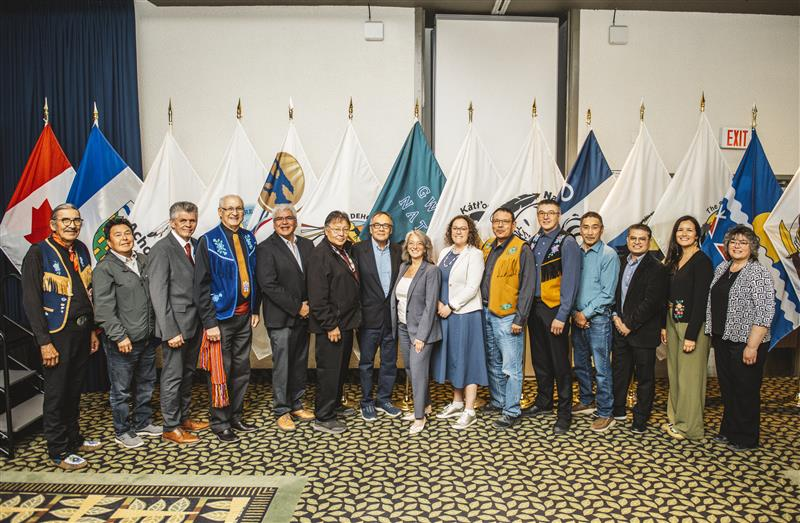
July: Canada’s Largest Indigenous-led Land Conservation Project
As another big moment in July 2025, Canada launched one of the world’s largest Indigenous-led land conservation projects, supported by over $300 million in investments. The project “Our Land for the Future” in the Northwest Territories involves 21 Indigenous governments, federal and territorial governments, and private donors reaching $375 million in new investments aimed at conserving nearly 380,000 square km of land and water. This number represents roughly 30% of the entire Northwest Territories and over 2% of Canada’s total landmass.
The project entails prioritising Indigenous leadership in environmental stewardship, supporting programs such as Indigenous Guardians, who are appointed to monitor ecological health, protect cultural practices, safeguard biodiversity, and overall improve communities’ health and wellbeing. It also funds the creation and management of both new and existing Protected Areas and Indigenous Protected and Conserved Areas (IPCAs), together with climate mitigation research and conservation-based economic development, including ecotourism and traditional harvesting economies.
Overall, this initiative addresses long-standing challenges faced by Indigenous peoples in Canada, from formal recognition of land rights to economic marginalisation and the preservation of cultural practices. Dahti Tsetso, CEO of the “Our Land for the Future” initiative, celebrated its transformative potential by underscoring that it will create numerous jobs, support land protection, and offer crucial opportunities for Indigenous youth. Hence, by combining conservation with socioeconomic empowerment, this project marks Indigenous leadership as a global model for sustainable stewardship.
August: The Fourth Indigenous Women’s March
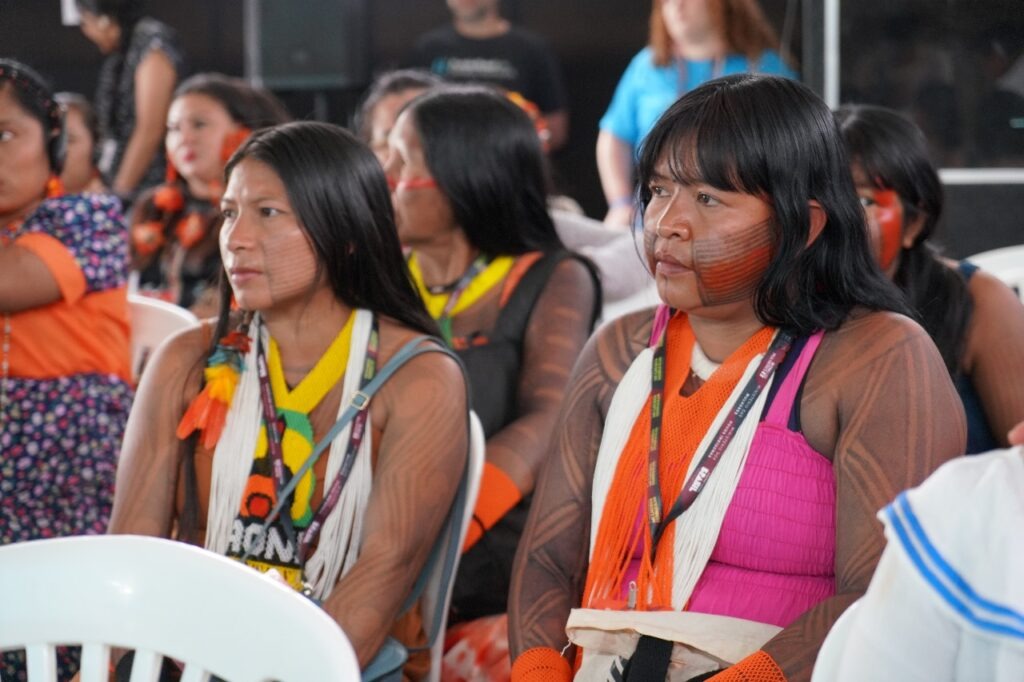
In August 2025, more than 7,000 Indigenous women marched the streets of Brasília to have their voices heard. As the Fourth Indigenous Women’s March, the mobilization served as an expression and a platform of visibility for the struggles of Indigenous women not only throughout Brazil, but also on an international scale. The result? The development of propositions for a National Policy Plan for Indigenous Women.
The days preceding the March held the opening of the first national Conference of Indigenous Women. Political leaders came together to address gender-based violence, democracy, and the strengthening of public policies in a joint effort with Indigenous women. The topics discussed included territorial management, the climate emergency, combating gender-based violence, health, and ancestral education. The theme “Our Body, Our Territory: We Are the Guardians of the Planet for the Healing of the Earth” flowed directly from this Conference into the March.
The two-kilometer March, dressed with songs, dances and other expressions, called for an end to the daily violence Indigenous women are subjected to. A plea for land demarcation branded the event. With it, the event embodied a sharp representation of the ongoing struggle of Indigenous peoples throughout Brazil.
More information on the intersection between climate breakdown and gender-based violence can be found on our website here. And don’t forget to check out the video on this topic on our social media!
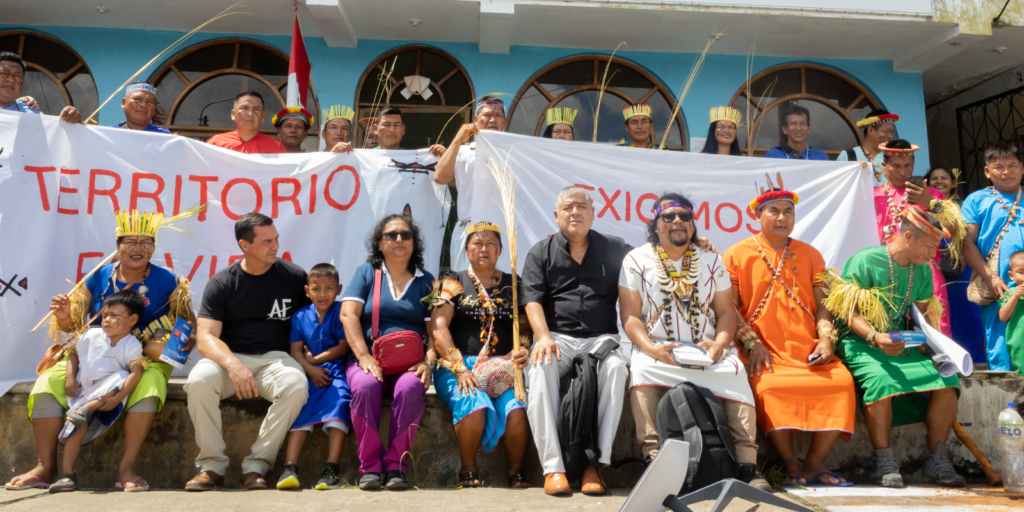
October: Peru’s Indigenous Peoples Achieve Historic Legal Victory for Land Security
Another institutional achievement was gained by Peru’s Indigenous peoples in October 2025. Lima’s Fourth Constitutional Court, a judicial body specialising in cases involving constitutional rights and violations, ruled that the Peruvian government had violated Indigenous peoples’ rights by failing to recognise and grant legal ownership of their ancestral lands. More specifically, the court held the prime minister, together with several ministries, and the regional governments of San Martín, Loreto, Amazonas, and Madre de Dios, responsible for the constitutional violations.
This achievement follows a period of intense pressure on Indigenous communities who have faced repeated attacks from illegal actors and state authorities. Attacks include invasions of territories granted to Indigenous groups in voluntary isolation, illegal logging and resource extraction, drug trafficking, and other criminal activities on Indigenous lands. The court’s sentence highlighted that the lack of formal land titles is a structural cause of these threats and of the violence faced by local communities, including the assassination of Indigenous leaders defending their territories.
In response, the court reinforced protections by prohibiting concessions in existing and pending Indigenous reserves, declaring state inaction unconstitutional and unlawful. In essence, this landmark ruling holds the Peruvian government accountable, strengthens the legal security of Indigenous peoples, and affirms Indigenous peoples’ rights to their ancestral lands. Because of this, it marks a historic step toward justice and self-determination in the country.
November: Indonesia’s Pledge to Recognize Indigenous Forests
A mere couple of days before the start of COP30: Indonesia has pledged to acknowledge the territory and rights of 1.4 million hectares of Indigenous forests by 2029. The announcement was made by the Indonesian Forestry Minister at the United for Wildlife Global Summit in Rio de Janeiro. If achieved, the area of recognized forests in Indonesia will grow by a factor of four.
The announcement, made on November 4, was greeted positively as a sign of improvement and a significant step in the direction of curbing deforestation. But Indonesian activists and Indigenous groups are sceptical. According to them, similar pledges have been made in the past, but these never unfolded or resulted in any tangible payoffs. Rather, land grabs and slow progress prevail.
Loud clashes continue to echo between Indonesia’s national climate actions and Indigenous communities’ objections. At the core of these rifts stands the widespread notion that forests and land can be treated as commodities, which dismisses their role as critical ecosystems upholding climate stability and human life. Indonesia’s pledge then, without backing from solid efforts, would remain only symbolic in nature.
November: COP30: The Clash Between Indigenous Presence and Fossil Fuel Lobbyists
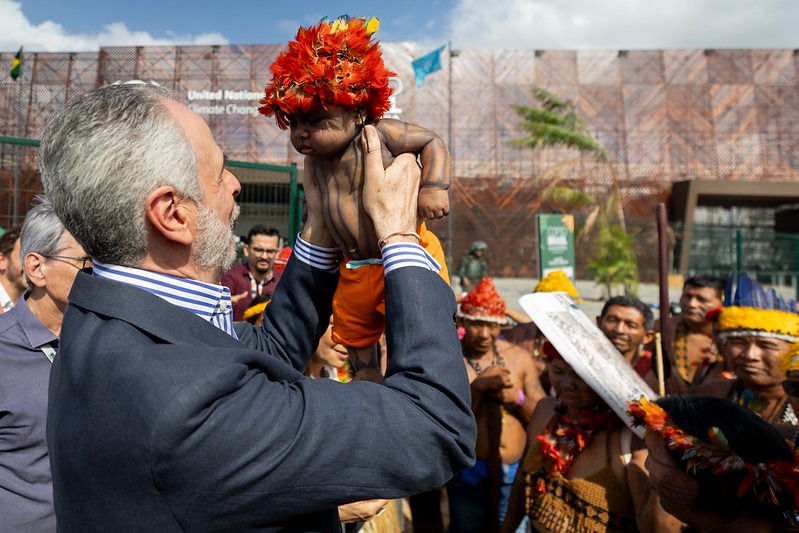
In November 2025, the world hungrily anticipated the outcomes of the two-week climate summit in Belém do Pará, Brazil. The negotiations saw the largest Indigenous delegation in any COP to date, with approximately 3,000 Indigenous delegates participating. But the event did not progress without tensions.
Many Indigenous attendees considered their participation symbolic rather than empowering, their visibility more a formality than an instrumental step forward. Despite the large turnout, only a fraction of the Indigenous delegation gained access to the decision-making table. At the same time, the summit attracted a record number of fossil fuel lobbyists. When, at last, tensions culminated, Indigenous protestors broke through security lines with the message: “Our forests are not for sale”.
Still, COP30 did not go by without any progress. Most notable for Indigenous peoples is that the Government of Brazil announced the demarcation of ten Indigenous lands, an addition to the 21 demarcated Indigenous Territories. More generally, COP30 has resulted in a New Climate Finance Work Programme, a Tropical Forest Forever Facility (TFFF), and a new focus on Indigenous knowledge and rights.
Want to know more about the outcomes of COP30 and what they mean for Indigenous peoples? Read our full article on COP30’s outcomes for Indigenous peoples here.
November: Victoria’s First Peoples’ Treaty: A Historic Step Towards Indigenous Self-Determination in Australia
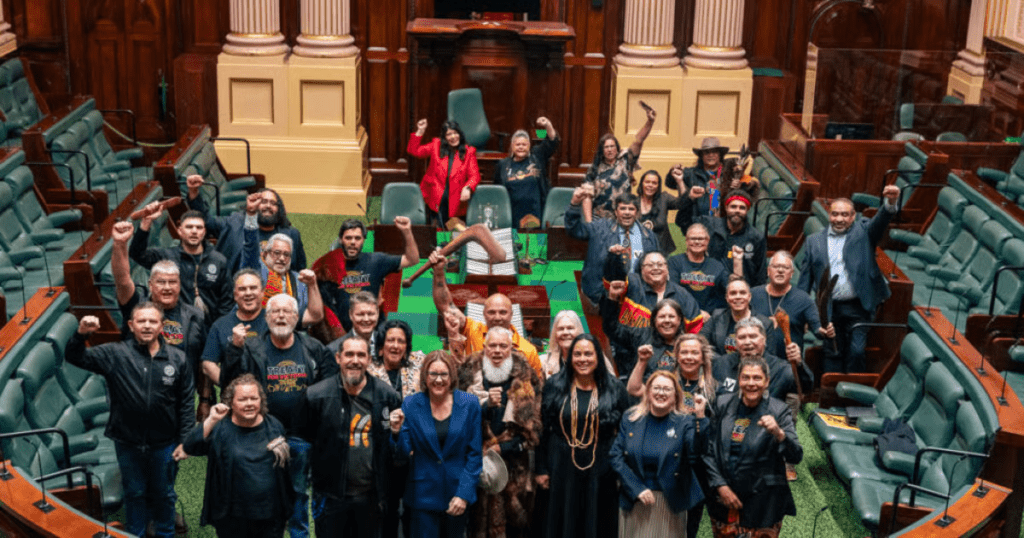
In November 2025, more than 220 years after British colonisation, the Australian state of Victoria formalised the country’s first treaty with Aboriginal peoples. This historic achievement establishes a permanent First Peoples’ Assembly to represent Indigenous communities in decision-making processes within the state. The treaty requires the government to consult them on laws and policies that affect their lives. It also institutes an independent oversight body, the Nginma Ngainga Wara (Outcomes and Justice Commission), to hold the government accountable to its commitments. More broadly, it continues the process of truth-telling to recognise past injustices while laying the groundwork for future negotiations with Indigenous populations.
Unlike countries such as Canada, the United States, and its neighbour New Zealand, Australia had never signed formal treaties with Indigenous populations due to the legal fiction of terra nullius. When the British arrived in 1788, they declared Australia a ‘land belonging to nobody’, denying Aboriginal peoples’ sovereignty and rights. In other words, the concept of terra nullius ‘justified’ British colonisation and the ensuing complete erasure of Aboriginal identities as well as representation in modern Australian politics.
The First Peoples’ Treaty in Victoria signals a historic step towards Indigenous self-determination, giving Aboriginal communities a direct role in decision-making. It explicitly rejects the doctrine of terra nullius and recognizes the role of Aboriginal peoples in the country’s culture and history. Because of this, the treaty represents both a milestone and a starting point for broader reforms that ensure Aboriginal rights and sovereignty nationwide.
November: Brazil’s First Indigenous University: Formal Recognition of Indigenous Epistemologies
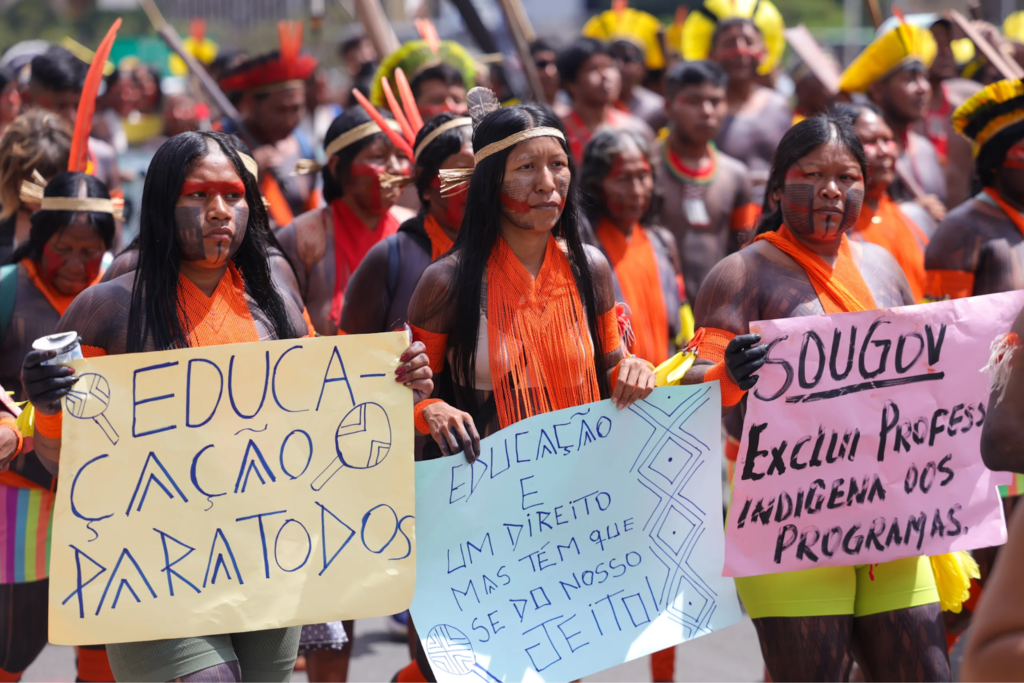
In November 2025, the federal government in Brazil submitted legislation to the National Congress to establish a groundbreaking higher education institution: the Indigenous Federal University (Universidade Federal Indígena “Unindi”). It is the country’s first federal university dedicated exclusively to long-overlooked Indigenous knowledge. This embodies a profound act of historical and epistemological reparation, aiming to integrate and recognise Indigenous traditional knowledge and wisdom within mainstream education. In support of cultural preservation, as well as environmental sustainability, the piece of legislation recognizes the crucial role of Indigenous knowledge in biodiversity protection and sustainable climate change solutions.
The institution of the Unindi is the culmination of extensive consultations between the Ministry of Education and Indigenous communities over the course of 2024. These consultations were aimed at addressing persisting disparities in higher education, where Indigenous students face high drop-out rates and overall underrepresentation. The government set out to establish a university that would operate under a multicentric model, prioritising Indigenous candidates and Indigenous guidance, with key leadership positions, including rector and vice-rector, held by Indigenous people. It serves as a way to ensure that the university reflects their knowledge, priorities and perspectives.
While marking a transformative milestone for the recognition of Indigenous knowledge and the inclusion and empowerment of Brazil’s Indigenous population, Unindi still faces significant challenges. Securing funding, ensuring integration across Brazil, and preventing isolation from the academic system are a few examples. Nonetheless, Brazil’s Indigenous Federal University demonstrates the global importance of valuing Indigenous knowledge and the transformative role it can play in addressing environmental struggles.
Conclusion
In the past year, Indigenous news has highlighted the mosaic of improvements and barriers experienced by communities all over the world. It has given us a new precedent of Indigenous involvement in climate talks for the coming years. Years of effort have paid off in the first conference for women on an international scale. Conservation and land demarcation have held a tight grip on the conversations that guided national climate action. But at the same time, Indigenous bodies are polluted and poisoned.
A return to the past months acts not only as a reminder of what should be celebrated; a glance back highlights where the struggles cluster. It tentatively provides a glimpse into the future. 2025 has showcased that, indeed, Indigenous peoples are standing up, not only for themselves but for the well-being of this Earth. Still, simultaneously, the last year has made it abundantly clear that pushbacks persist. Tremendous wins paired with persistent roadblocks underline the complexity of initiating change and accomplishing justice in a system unfit to accommodate it.
Taking a look ahead, 2026 offers a range of promising initiatives and programmes. From large-scale Indigenous Youth and Women programmes to local knowledge exchanges, Indigenous groups do not fall silent. Previous years have reflected a growing recognition of Indigenous rights and deeper efforts to ensure their security. But time alone stands not at the root of change; action and collaboration do. The year has only just begun