Authors: Marit Heppe, Rosa Jorba
Thousands of Indigenous peoples marching and protesting, a record number of fossil fuel lobbyists accredited, and a smoldering fire in the house; COP30 proved to be nothing short of paradoxical. And its conclusions only complement the clashing tone that has rippled throughout the negotiations.
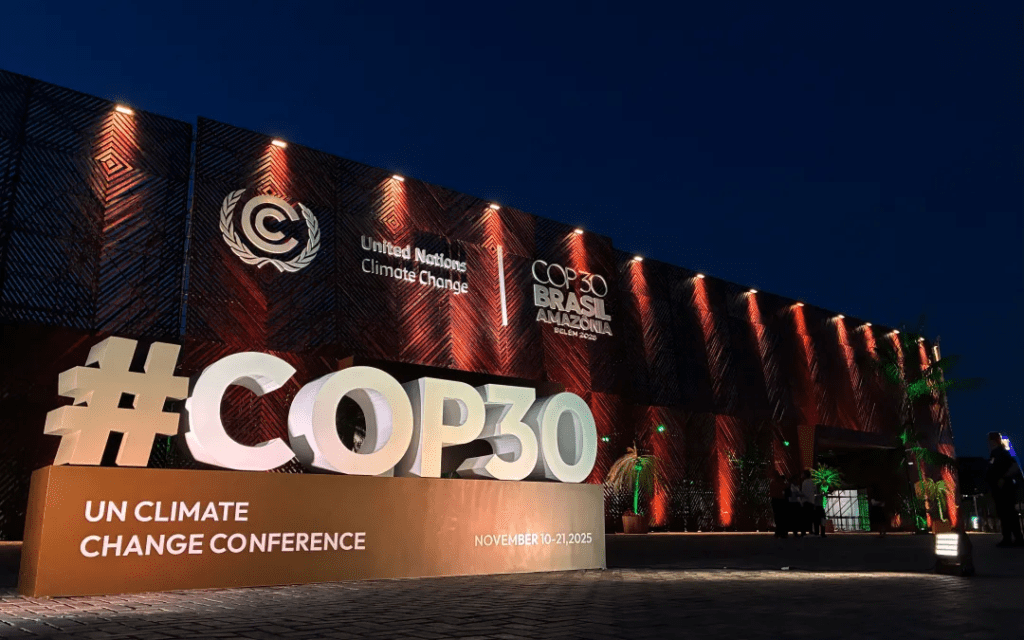
Over the course of two weeks, 56,000 participants from 194 countries gathered in Belém do Pará, Brazil, to address the climate crisis despite geopolitical tensions. Conceived as the “COP of truth,” this edition placed the idea of Mutirão — ”a collective mobilisation of minds, hearts, and hands” — at the center of efforts to break political deadlocks and restore faith in multilateralism. So, these twelve days of negotiations have had people from all over the world waiting in anticipation for their conclusions. But did COP30 succeed or fail?
Indigenous Peoples at COP30
From the get-go, the location of COP30 faced controversy, being at the heart of the Brazilian Amazon rainforest. Amazonia faces increasing environmental destruction driven by climate change, fires, deforestation and expanding agribusiness. At the same time, Brazil continues to approve new oil and gas exploration licenses. As reviewed in United Rising’s latest article “What to Expect from COP30? Indigenous Peoples at the Forefront”, for Indigenous peoples of the region, whose identity, culture and survival are inseparable from the forest, these contradictions were impossible to ignore.
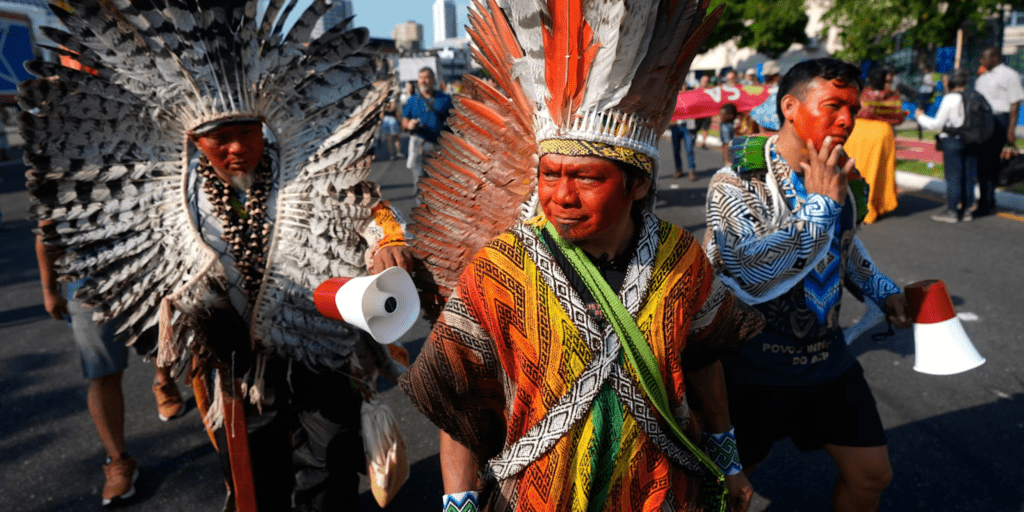
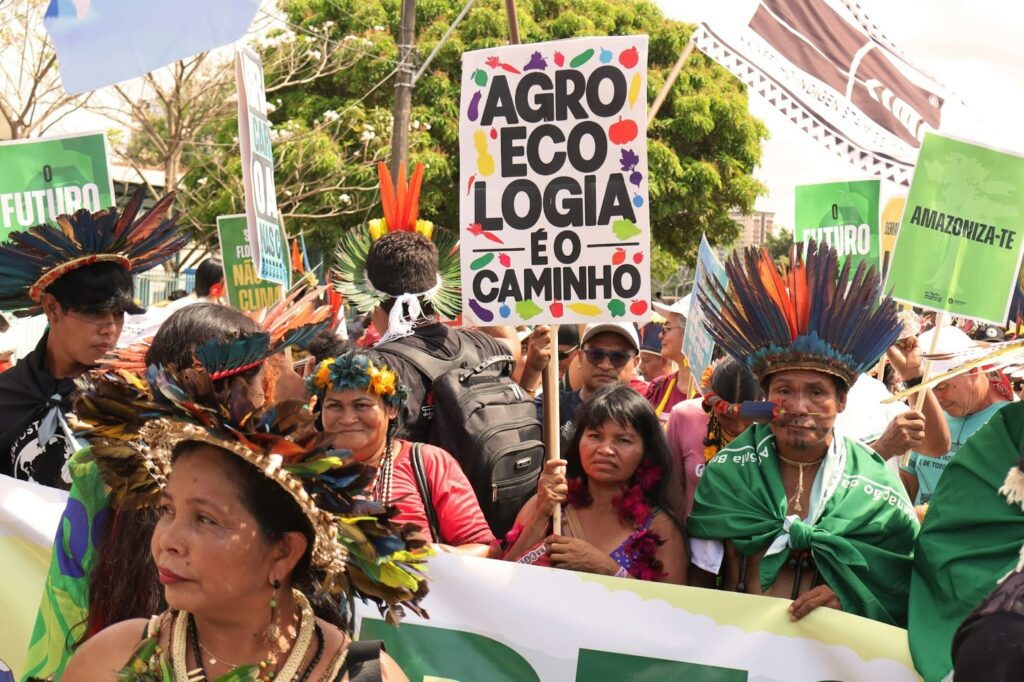
Consequently, COP30 saw the largest Indigenous delegation in any COP to date, with around 3,000 Indigenous participants, including 1,000 directly involved in official negotiations in the Blue Zone. Many traveled thousands of kilometers, some from Andes communities arriving by boat, in order to demand real influence in decisions affecting their territories. Despite this visibility, many leaders argued their participation remained symbolic rather than empowering. As Thalia Yarina Cachimuel, a Kichwa-Otavalo representative, stated:
“This was a COP where we were visible but not empowered.”
Tensions finally culminated when Indigenous protesters broke through security lines carrying signs declaring “Our forests are not for sale.” The renowned leader and forest guardian Raoni Metuktire urged global leaders to act decisively: “If we continue destroying everything on this earth, there will be chaos.” For many, the stakes could not be clearer. A Tupinambá leader expressed the frustration felt across Amazonia: “We can’t eat money. We want our lands free from agribusiness, oil exploration, illegal miners and illegal loggers.”
However, the conference did not go without any wins. A great highlight that has come out of the negotiations is that the Government of Brazil announced the demarcation of ten Indigenous lands. The demarcation ordinances represent institutional recognition of the right to Indigenous lands and the definition of territorial boundaries. The current administration has already demarcated a total of 21 Indigenous Territories. Among the territories is Tupinambá de Olivença (BA), whose demarcation had been promised during the ceremony marking the return of the Tupinambá Cloak, an artifact that remained on display in a Danish museum for 300 years and was repatriated to Brazil last year.
The measure also encompasses the following territories: Vista Alegre (AM), Comexatiba – (Cahy-Pequi) (BA), Ypoi Triunfo (MS), Sawre Ba’pim (PA), Pankará da Serra do Arapuá (PE), Sambaqui (PR), Ka’aguy Hovy (SP), Pakurity (SP), and Ka’aguy Mirim (SP). These areas are inhabited by the Mura, Tupinambá de Olivença, Pataxó, Guarani-Kaiowá, Munduruku, Pankará, and Guarani-Mbya Indigenous peoples.
Nonetheless, to call this climate summit a grand triumph for Indigenous peoples would be a leap. The negotiations certainly summoned historic representation, securing a larger presence than ever before, and concluded with crucial advances in protecting Indigenous rights. Yet, only a fraction were given access to the decision-making table. On top of that, mixed outcomes have left many with the feeling that any move to significant systemic changes has been disregarded. And both the role of and consequences for Indigenous peoples were merely considered a piece of the puzzle; COP30 left more than enough space in the negotiations for other visitors, most with wholly different ambitions.
The Full Picture: COP30’s Prizewinners
The conference in Belém, energetically framed as the “implementation COP”, was intended to shift the discussion from determining what climate responses are necessary to how they are employed. With the Paris Agreement hitting its tenth anniversary and major commitments already clocked in for years, delegates were expected to single out tools and measures to turn these ambitions into actions. The question is, were negotiators successful?
Urging all attendees to enter a true Mutirão, the COP30 Presidency made a start at cooperative dialogue. This decision has prompted and reinforced a number of positive outcomes. A New Climate Finance Work Programme will serve as a platform for climate finance progression and political materialisation. Adaptation finance is expected to triple by 2035, which supports upholding the pressure on developed countries to scale up financial relief. Even before COP30, a Tropical Forest Forever Facility (TFFF) was launched, aiming to raise $125bn to channel to 74 developing countries for preserving their forests. On top of that, both the land and mitigation program and the Just Transition mechanism recognize the right of Indigenous people to the land, their role in forest management and traditional knowledge.
However, the cooperative dialogue at COP30 was injected with a record number of fossil fuel lobbyists. Over 1,600, or 1 in 25 attendees, lobbyists were granted access to the summit. Compared to COP29 in Baku, Azerbaijan, that amounts to a 12% increase. The only party with a bigger presence than fossil fuel interests was Brazil. As Nerisha Baldevu from Friends of the Earth Africa stated:
“From the halls of the UNFCCC to our lands and territories, fossil fuel corporations are wrecking our communities and environment. Yet the red carpet is rolled out for thousands of lobbyists to roam the corridors.”
As a consequence, a streak of dissent followed, with negotiations at COP30 culminating in a deal with zero reference to the fossil fuels that are generating the Earth’s warming. The hotly debated fossil fuel phase-out plan, put forward by Brazilian President Liuz Inácio Lula da Silva, failed to gather the support of all 195 countries. Additionally, the plan to halt deforestation also reached a standstill. Other criticism extends to the postponed discussions about food security and agriculture to June 2026; the fact that food solutions never reached COP30’s final agreement despite new pledges; and fallacies in the TFFF and tripled adaptation finance for lacking important details and consistency.
Thus, pushback from a handful of nations hampered the integration of serious topics into palpable actions. Big oil-producing countries have been the major blockers of decisive climate action, ultimately gaining from COP30’s final deal. Despite their absence, the United States belongs to this group, with President Trump’s stance boosting opposition to a just transition. Yet, ranging from food and water to energy and adaptation, these matters are not simple concerns of the future; they represent the lived realities of those most affected by climate change, hunger, and poverty today. The phase-out of fuel as part of a multilateral solution was their key demand, a call supported by over 80 countries. Nevertheless, the final version does not mention a phase-out of fossil fuels nor any reference to a roadmap. In the absence of a concrete target and timeline, there are no stringent measures that would commit nations to deliver and be held responsible. There is no clear path ahead.
So Where Does COP30 Leave Us?
All in all, the “Amazon COP” has been paradoxical. It proved both crucial for Indigenous peoples while also notably limited in advances. The climate summit constituted an opportunity to address key issues, including territorial rights, climate financing, and cultural recognition. Simultaneously, the broader climate agenda stalled in the very areas that matter most to Indigenous peoples: fossil fuel phase-out, deforestation, and systemic accountability.
The summit elevated Indigenous visibility of indigenous peoples, turning their knowledge and voices indispensable to another step toward climate justice. The TFFF, the commitments to secure land rights, and a funding pledge are the tangible outcomes of Indigenous collective efforts to have their voices heard. A true Mutirão and a humble sign of political transformation. COP30’s process placed Indigenous participation and voices in the spotlight, a token of progress and inclusivity. And still, its outcomes highlight the challenges that remain. There is no policy integration for Indigenous territorial management, nor any mechanism in place to voice instrumental critique against carbon projects. In terms of climate justice, COP30 shows a persistent imbalance: those least responsible for the crisis continue to shoulder its heaviest burdens, while the states and corporations most responsible for emissions maintain disproportionate influence over negotiations.
Thus, although not without any achievement, COP30 missed the opportunity to mark a historic turning point in the transition away from fossil fuels. The climate summit ended in a deal with no consensus, failing to address the Earth’s acute crisis and to meet the world’s pressing needs. Where does that leave us? For most, in a place of disappointment. And the foul flipside to that is the unfaltering need for hope and action. COP30 has left plenty of room for improvement, and the following years will have to fill these gaps. But in Greta Thunberg’s words: “Once we start to act, hope is everywhere.” And next steps are as necessary as inevitable.
The Next Steps
While the “implementation COP” did not fully succeed in pinning down concrete tools and measures, not even giving name to fossil fuels, there is a glimmer of hope. In April 2026, the First International Conference for the Phase-Out of Fossil Fuels will be held in Santa Marta, Colombia, co-hosted by the Netherlands. Held in the world’s fifth-biggest coal-producing nation, the summit sets a powerful tone: even those nations most reliant on fossil fuels want to shift away from oil, gas, and coal. Yet, success hinges upon a remarkable degree of international collaboration.
In parallel, Belém confirmed that COP31 will congregate in Antalya, Türkiye, with Australia leading the negotiations, marking the continuity of the climate agenda in 2026. Even if still a while away, some major opportunities already present themselves. Though limited in its reach on the broader action agenda, Australia’s key role as President for Negotiations serves as a chance to give a platform to the Pacific, the nations confronted by the brunt of the climate crisis. Türkiye, on the other hand, has the potential to act as a bridge between countries, being connected to both Europe and Asia.
Although the prospect of a COP in Türkiye raises concern over Indigenous participation and worries of climate inaction persist, determination cannot be drowned. Giving up is no option. After all, evacuating from a venue on fire might be grueling, but evacuating from a planet on fire is futile. As Irene Vélez Torres, Minister in Charge of Environment and Sustainable Development of Colombia, wonderfully said:
“As difficult as it can be, we also know that this conversation cannot end here. We must keep the momentum, lead with bravery, rise to the challenge, and build a coalition of the willing.”